Thermal
Thermal Overview
The thermal system is responsible for monitoring and maintaining the temperature of all subsystems within safe limits. It ensures that each component remains within its survival temperature range when not operating, and within its operational temperature range during active use. By managing these conditions, the system protects hardware integrity and ensures reliable performance throughout the mission.Thermal vacuum testing are conducted to validate system performance under simulated space conditions.
TVT Preparations
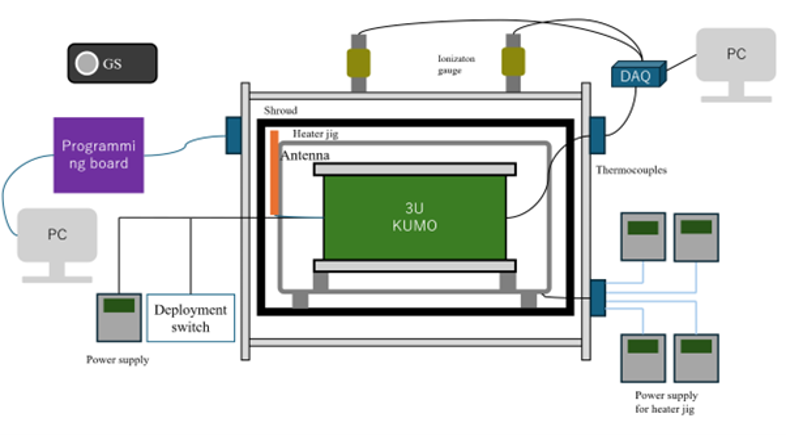
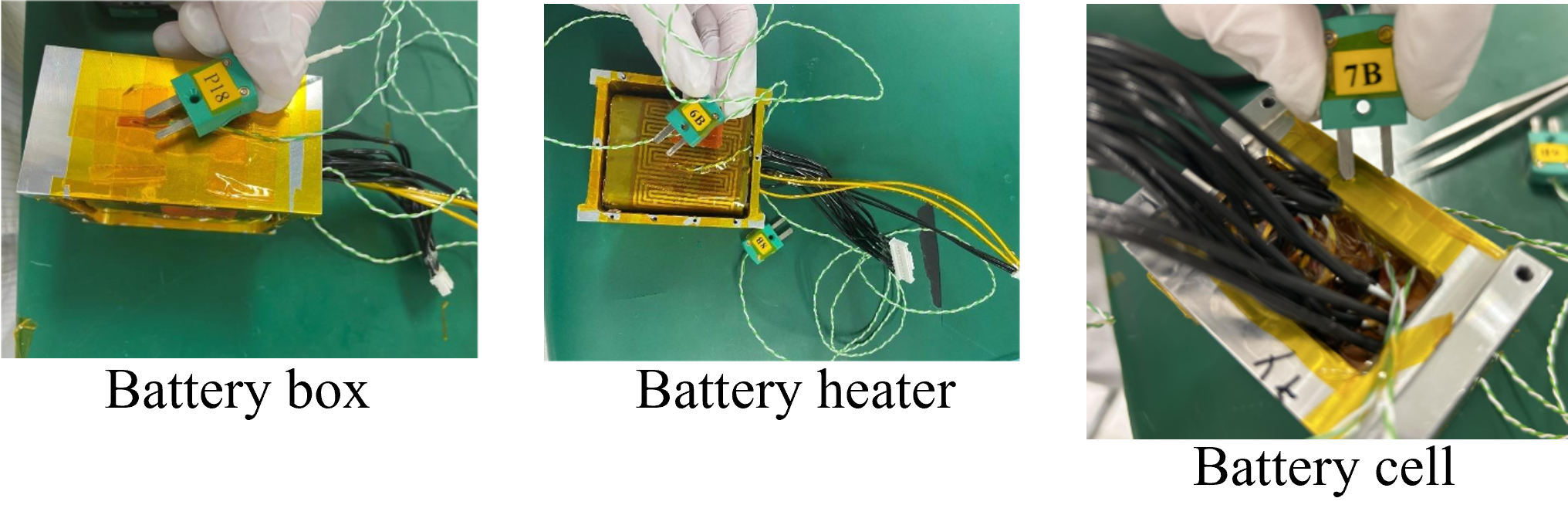
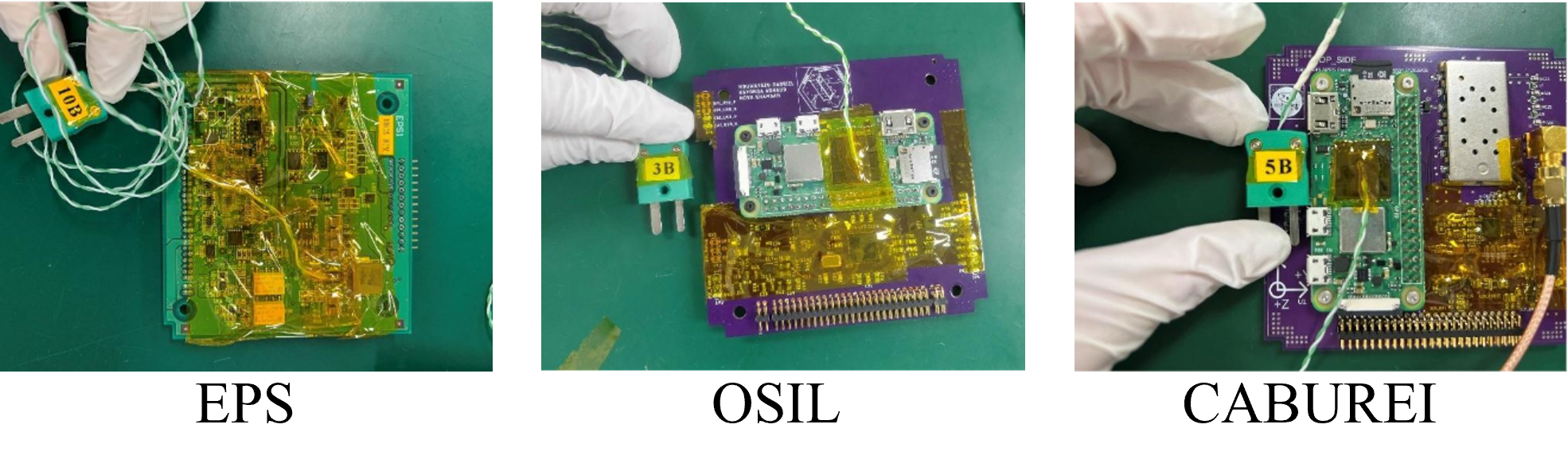
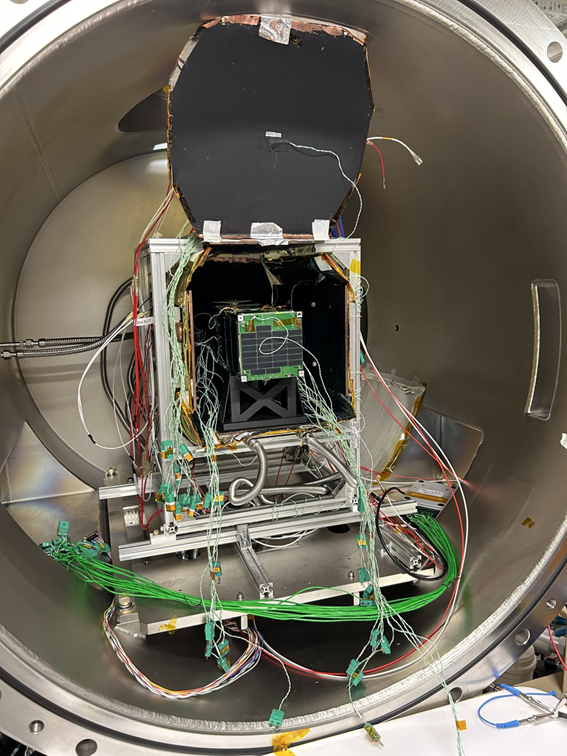
TVT preparation involves ensuring the test chamber can meet the required conditions and securing its availability for the planned test duration. It also includes instrumenting the satellite with thermocouples at all critical points to enable accurate temperature monitoring throughout the test.
Thermal Vacuuming Test (TVT)
Thermal Vacuum Test (TVT) is one of the most important environmental tests for satellites. In this test, the satellite is placed inside a vacuum chamber where the pressure and temperature conditions of space are simulated. By exposing the satellite to repeated hot and cold thermal cycles under vacuum conditions, we verify that all systems can operate properly in the harsh space environment. The test also helps confirm the reliability of the thermal design and the survivability of onboard components before launch.
TVT Sequence
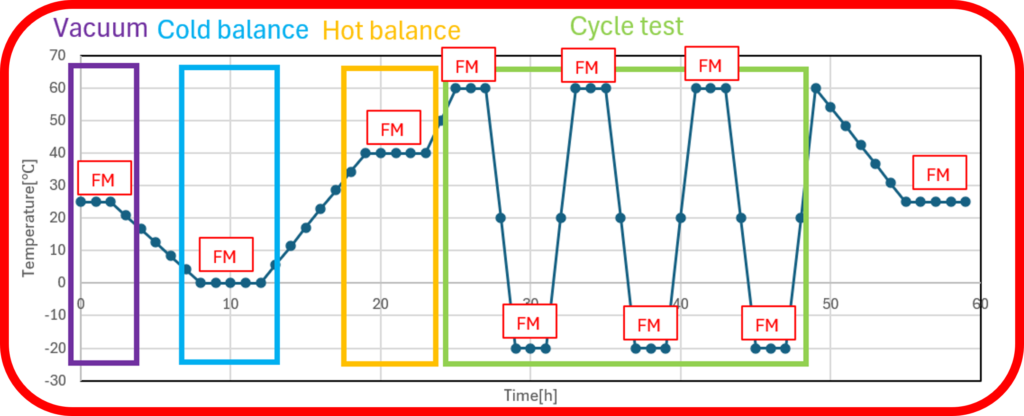
The test sequence included operation at room temperature, followed by cold and hot balance tests at flight temperatures, and thermal cycling across multiple phases. Functional testing was performed during each stage to ensure reliable operation throughout temperature transitions, before returning to room temperature conditions.
Thermal Simulation: Satellite model
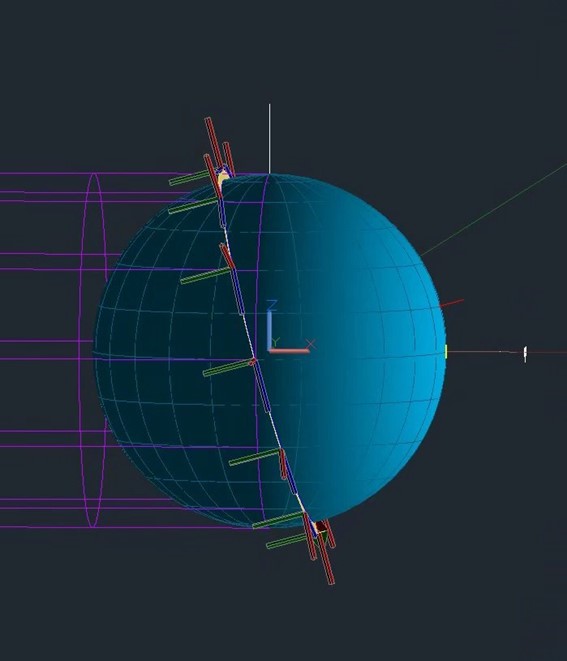
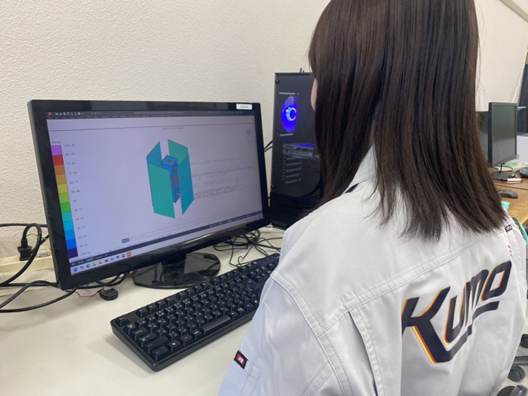
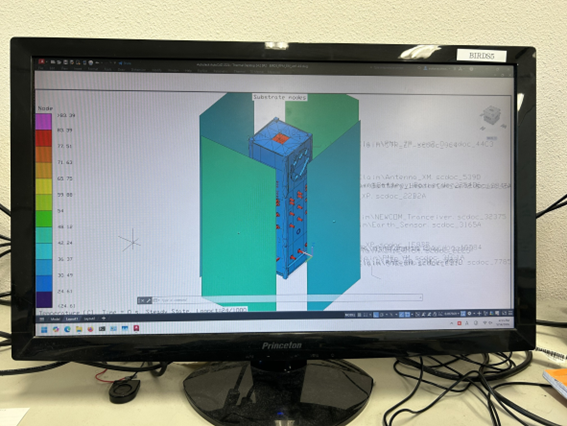
We use the software “Thermal Desktop” for our thermal simulation. Thermal simulation of the satellite model is conducted to predict the temperature distribution of the spacecraft during different mission conditions. A detailed thermal model is created using the satellite’s structure, materials, and thermal properties. Through simulation analysis, we evaluate heat transfer between components and estimate temperatures in both hot and cold cases. These results are used to improve the thermal design and to compare them with actual test data obtained during the Thermal Vacuum Test.
Thermal Simulation: On Orbit
On-orbit thermal simulation is performed to analyze the thermal behavior of the satellite throughout its mission, from launch to end-of-life operation. The simulation considers orbital conditions such as solar radiation, Earth infrared radiation, eclipse periods, and satellite attitude. By reproducing the thermal environment encountered in orbit, we verify that the temperature of each component remains within its allowable operational range during all mission phases. This analysis is essential for ensuring stable satellite operation and maintaining the reliability of onboard subsystems in space.